Overview
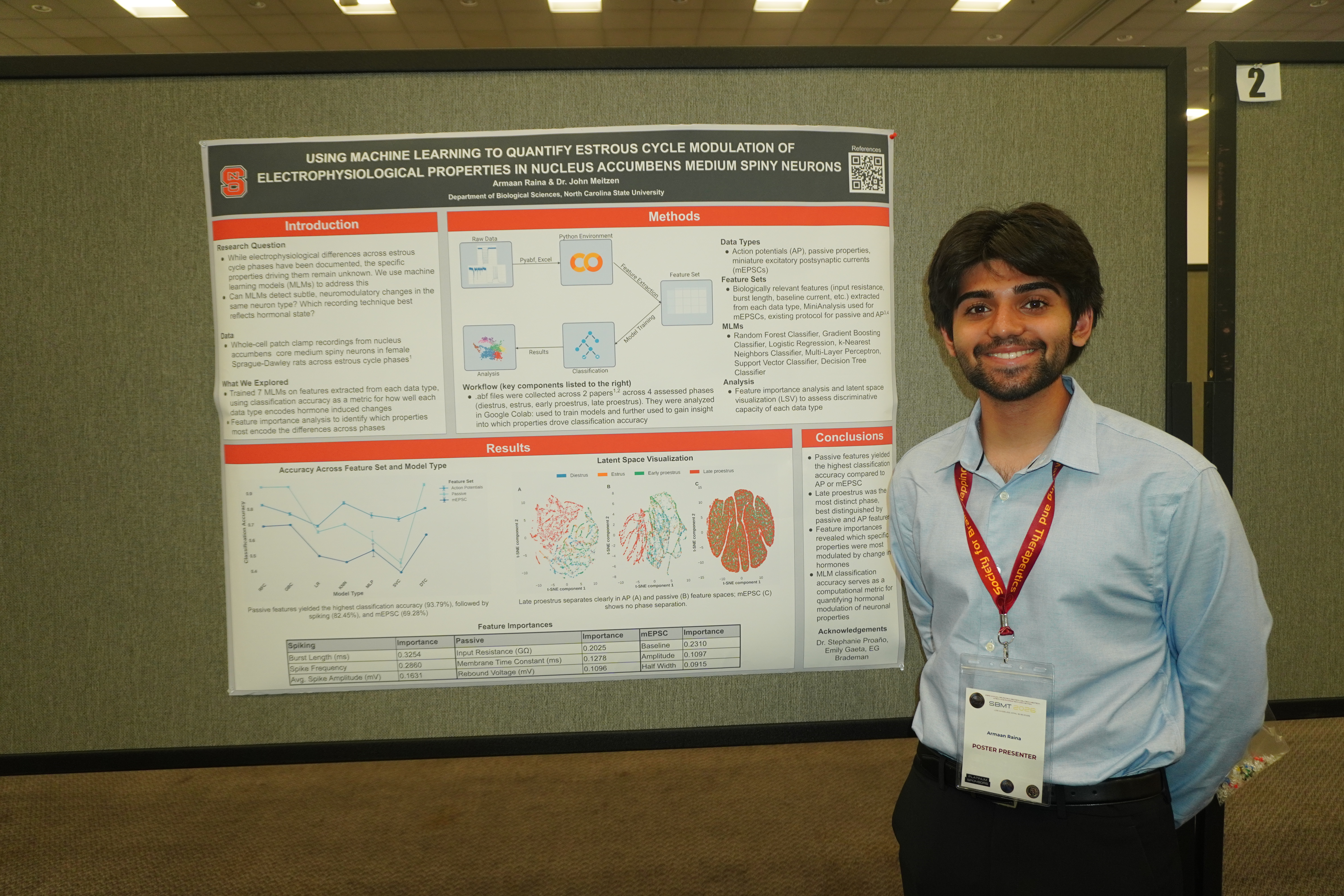
Using whole cell patch-clamp data recorded across four estrous phases from rats, I trained machine learning models to classify phase based on features sets extracted from different recording techniques (mEPSC, spiking, passive) and did a deep dive into model performance, feature importances, and each feature set in latent space.
Current and previous work
Estrous cycle classification
Taking the dataset I published in the mEPSC Dataset Project, I utilized various Python packages to import the data into Google Colab, make it usable, and filter it. A variety of biological signal types (spiking, mEPSC, and passive membrane potential)—each capturing different aspects of neuronal function—were explored. I then tested model accuracies of various machine learning algorithms across features extracted from the different signal types, indicating which signal type encodes estrous cycle phase best. This more broadly represents an exploration of how best to computationally represent small-scale neuromodulatory differences in cells within the brain. More on this coming soon...
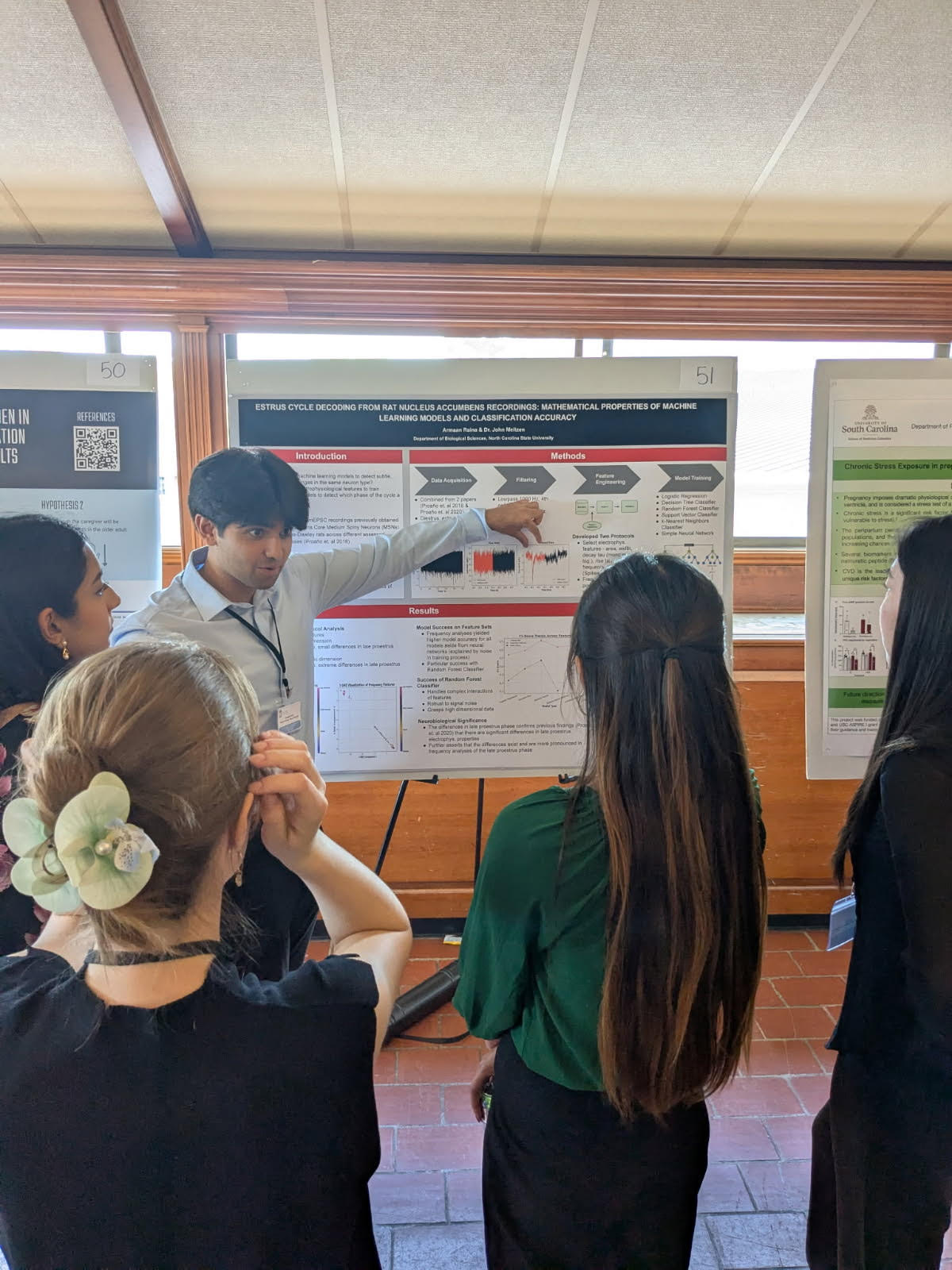
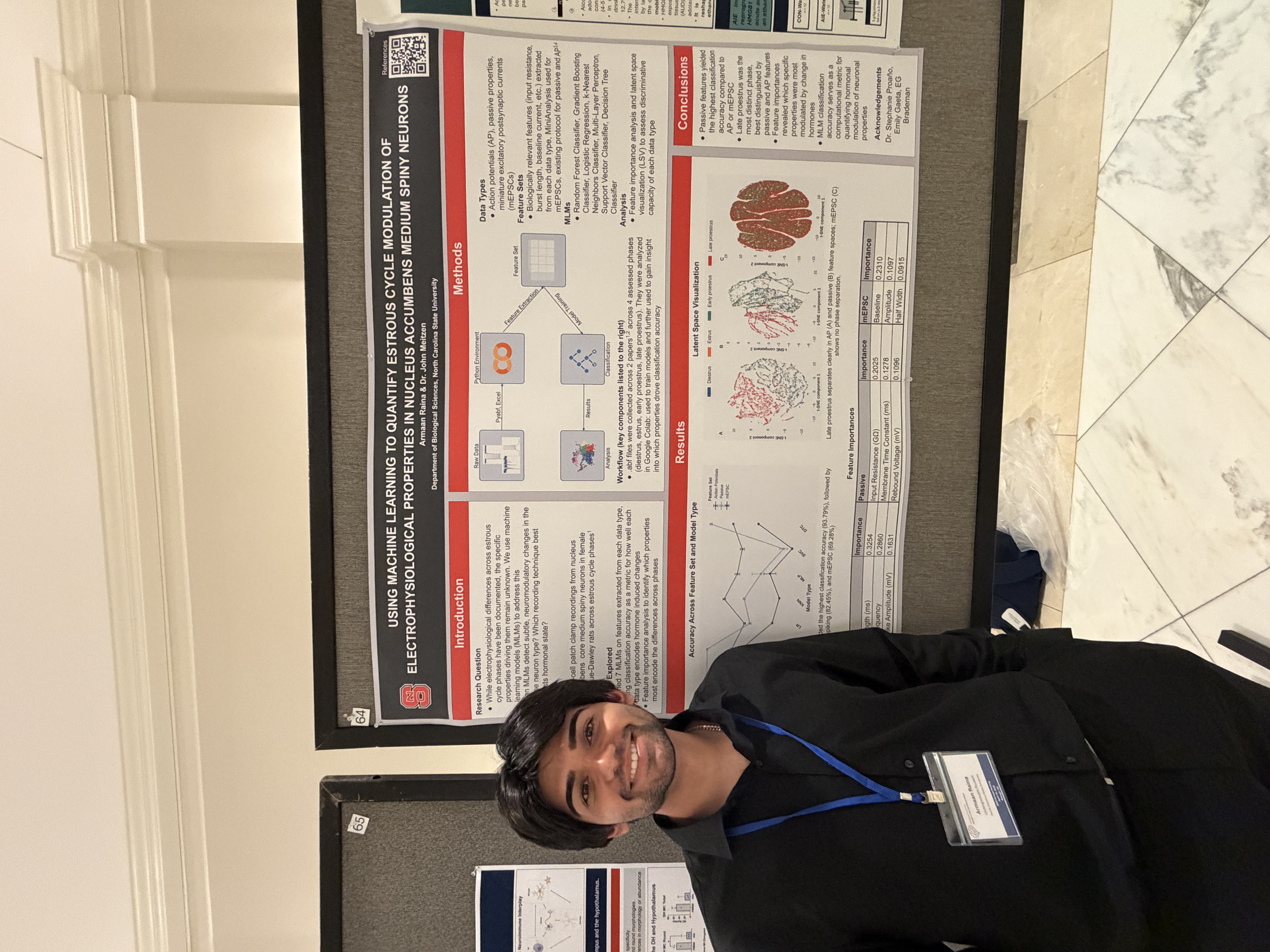
On the right are some pictures of my poster presentations at SYNAPSE 2025, triangle SFN 2026, and SBMT 2026.
mEPSC dataset publication
As part of my first project in the Meitzen lab I used a simple Python script to automate the merging of many Excel spreadsheets into a dataset with data from two papers, which I manually cleaned. I gained a lot of knowledge about how to read academic papers and understand what is important amongst a lot of jargon during this time.
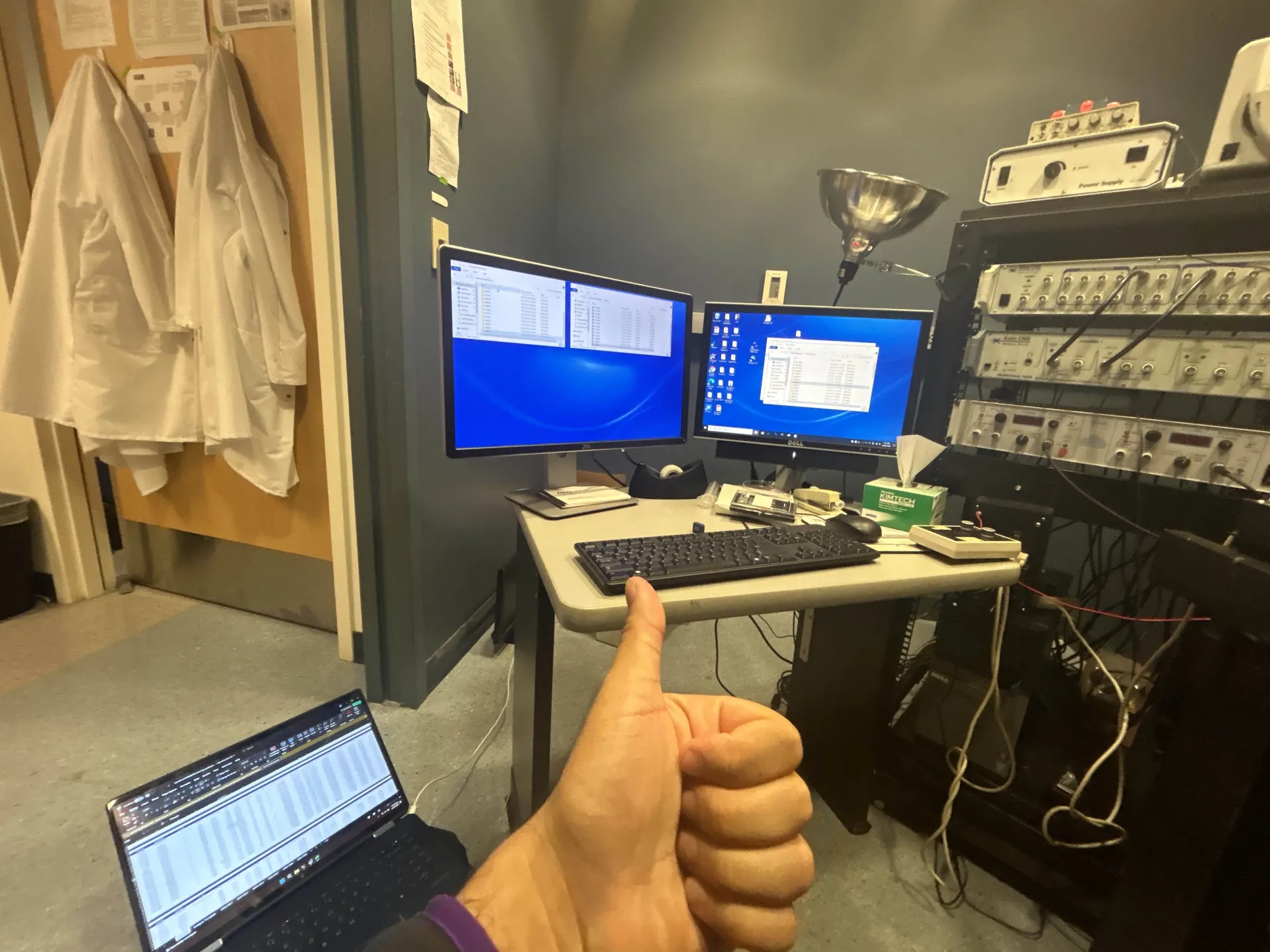
In the rig room scouring the old computers for abf files.